Email marketing for small business: what to automate and what to keep personal
What should you automate in email marketing for small business? More than you probably are, but not everything.
Automated emails beat one-off sends on nearly every metric that matters. A handful of emails still work better coming from you, written in the moment. The trick is knowing which is which.
Why you should automate more than you think
The gap isn't small. According to Designmodo's email marketing statistics roundup, automated emails generate 320% more revenue per email than standard broadcast campaigns, and welcome sequences convert best of any automated trigger, at just over 3% per recipient.
The writing isn't better. The timing is. An automated email lands the moment someone signs up, the day after they buy, or three days after they fill in a form. A manual one lands whenever you next remember to hit send.
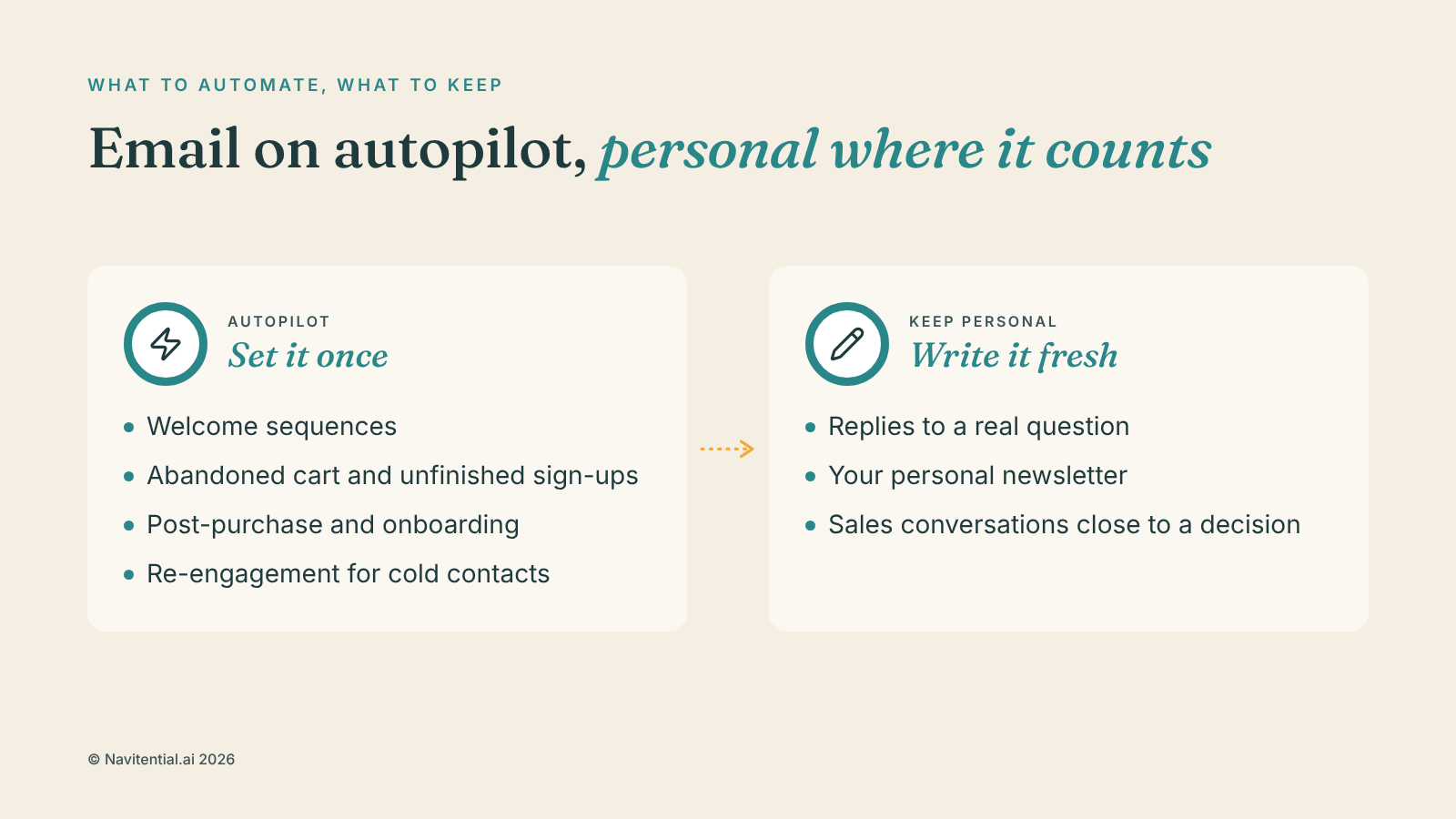
What belongs on autopilot
Welcome sequences
The best-converting automated email there is. If you only automate one thing, make it this.
Abandoned cart and unfinished sign-up follow-ups
Timing is everything here, and timing is the one thing automation does better than a busy human remembering to check.
Post-purchase and onboarding emails
What to expect, key resources, where to find the community. It's the same for everyone, so there's no reason to write it fresh each time.
Re-engagement for cold contacts
List hygiene matters more than most people think. The same Designmodo roundup reports that businesses cleaning their list quarterly see open rates 22 to 31% higher than those that never remove inactive contacts. An automated re-engagement (or removal) sequence does that job without it becoming another monthly chore.
What should stay manual
Replies to a real question
When a client or lead emails you about something specific, a templated reply reads as exactly what it is. This is where a human answer matters most.
Your personal newsletter
A newsletter that's meant to be current and personal loses the point if you wrote it six weeks ago and set it running. Automate the mechanics, like the schedule and the list. Don't automate the voice.
Sales conversations that are close to a decision
A warm lead who's nearly ready usually responds better to a real, specific message than a generic nudge. This is where your judgement wins hands-down.
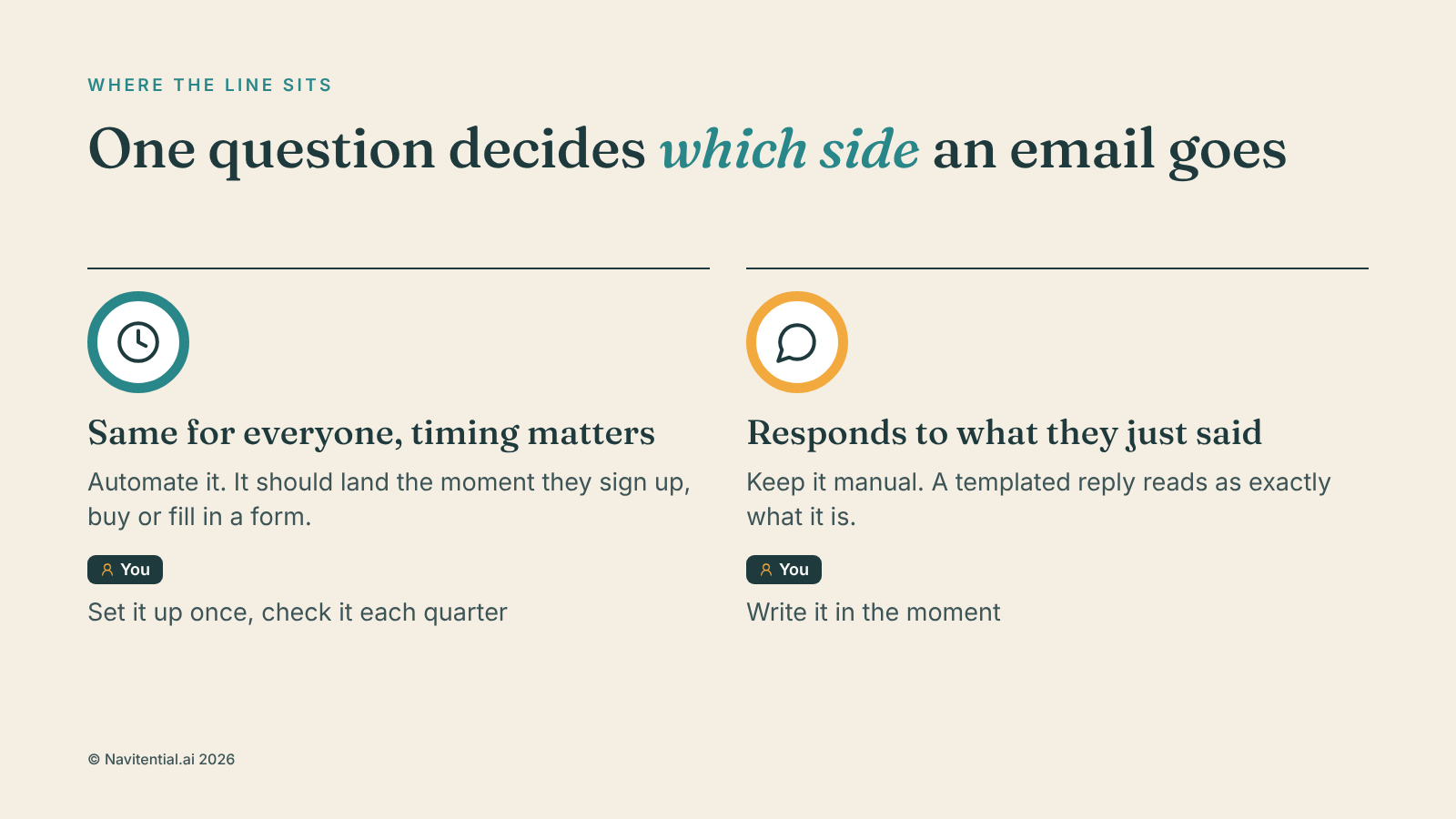
Where the line sits in email marketing for small business
Automate anything that's the same for every reader and benefits from perfect timing. Keep manual anything that has to respond to what this particular person just said or did.
Most solopreneurs I work with get this backwards. They automate the personal emails to save time, then send the repetitive ones by hand because it feels more "real". Swap them over and both improve.
Automated doesn't have to mean generic
Basic personalisation lifts results: their first name, the product or tag that started the sequence, a nod to what they signed up for. Designmodo's roundup also reports brands using AI-driven personalisation seeing up to 42% higher revenue and click-through rates above 13%.
You're aiming for an email that's relevant and on time. Not one that's on time and sounds like a robot.
Frequently asked questions
Will my list notice if lots of my emails are automated?
Not if the timing and relevance are right. Most people can't tell a well-triggered automated email from one you sent by hand. Some will. What they notice more is bad timing and generic content, and that happens just as easily with manual email.
How often should I clean my email list?
Quarterly is a sensible default, and it lifts open rates among the people who are still engaged and protects for your sending domain authority.
Should I be A/B testing too?
Yes, where you can. In my experience, subject lines are the easiest place to start because you see a result quickly.
If you only do one thing this week, check whether your welcome sequence exists and still says what you'd say today.