Marketing funnels that actually talk to your sales process (most don't)
Most small business owners run two systems that were never built to talk to each other. One is a marketing funnel, usually from a template or a course. The other is a sales process that's really "however I've always done it": some DMs, some memory, some vibes.
Nobody sat down and joined them up. That gap is where leads quietly disappear.
I'm not arguing for a rigid sales script. I'm arguing for designing your funnel around how you actually sell, instead of bolting your selling onto a funnel that assumes you sell like someone else. It's the first thing we work on at the NSW Small Business Month workshop on Thursday 22 October.
Most funnels are bolted on
Plenty of small business funnels come from the same template: opt-in, three nurture emails, a sales page, a checkout button. That's fine if you sell that way, with people deciding on the page and buying without talking to you.
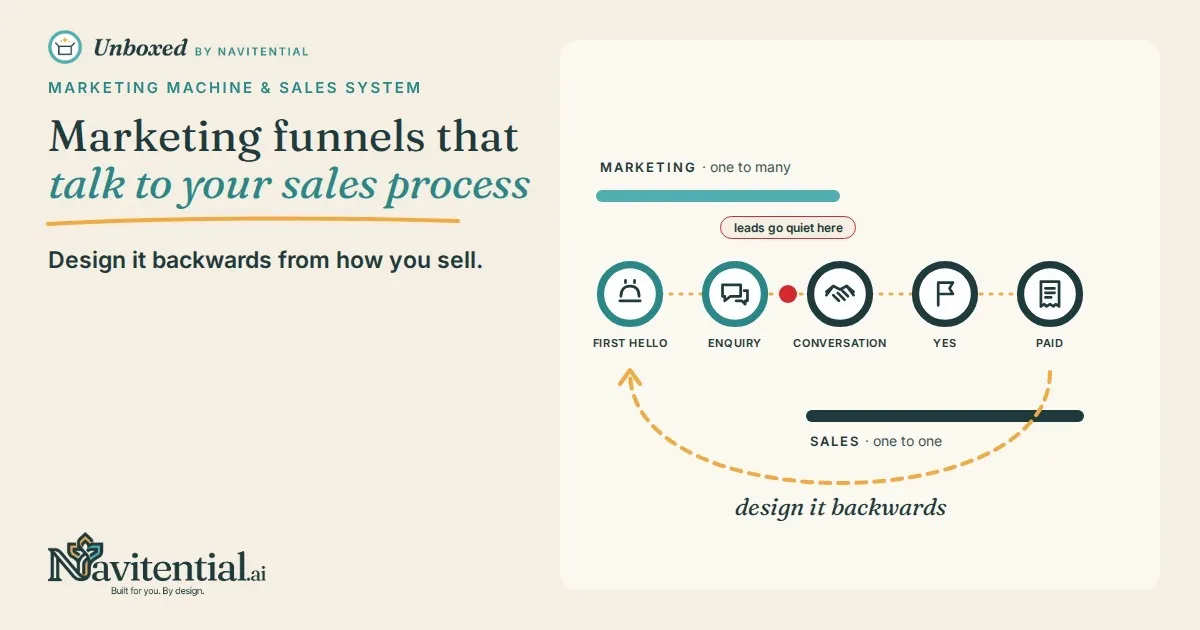
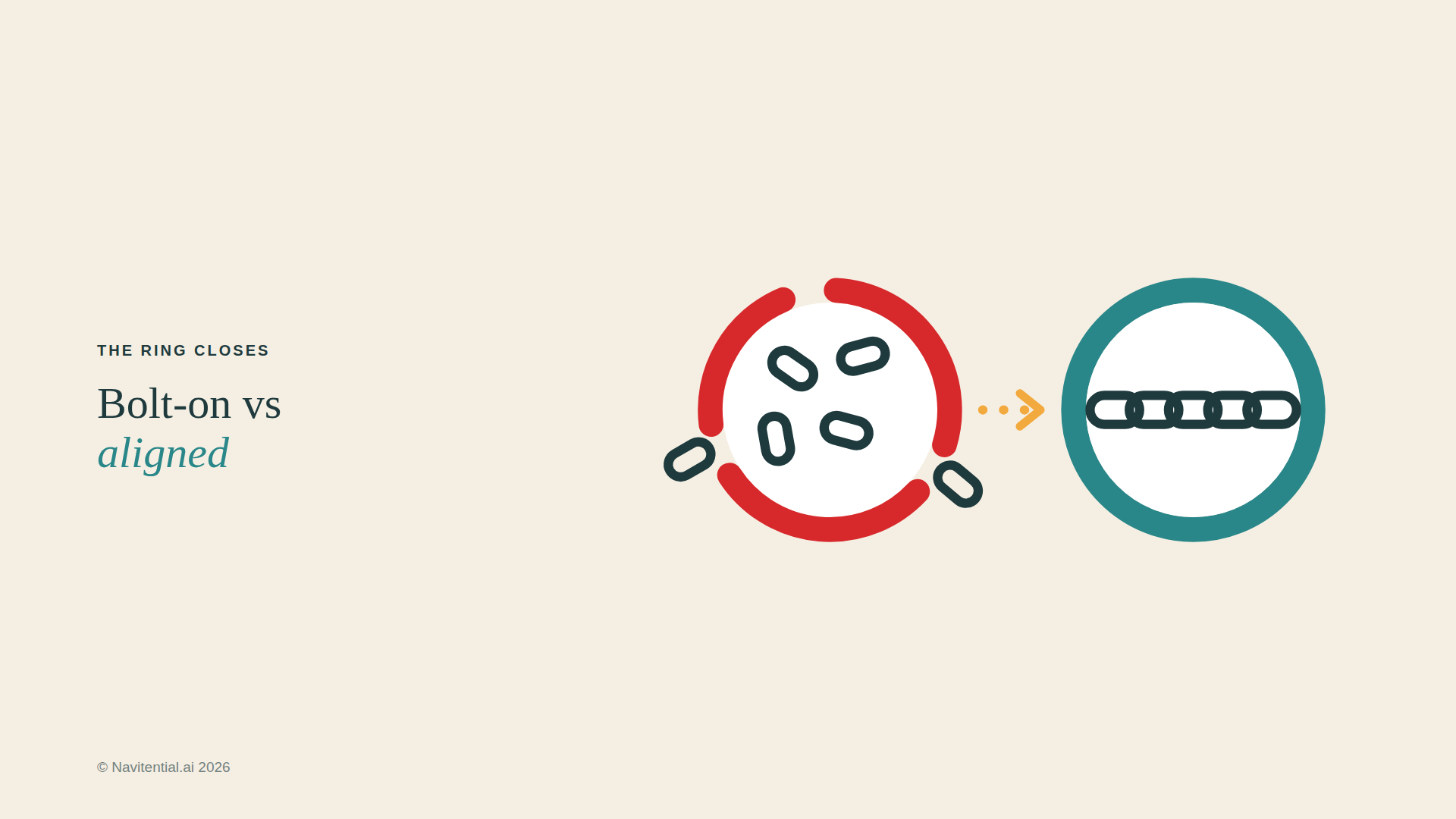
It's a poor fit if you close on a phone call, over coffee, or after three back-and-forth messages. A bolted-on funnel is a template sitting on top of however you've always sold. The two systems never talk, and leads go quiet between the steps.
An aligned funnel is designed backwards from your real sales process. Every step hands the lead to the next one, with the context you need when you finally talk to them.
Where your leads leak
Before you touch any tech, answer three questions honestly:
Can you say who you help in one sentence?
Can you name the steps a lead takes to buy from you?
Do you know which step leaks the most?
If the first one is hard, the funnel isn't the problem yet. It's the clear customer and clear problem issue Nimmity and I opened the series with, and no funnel can fix a message that isn't clear.
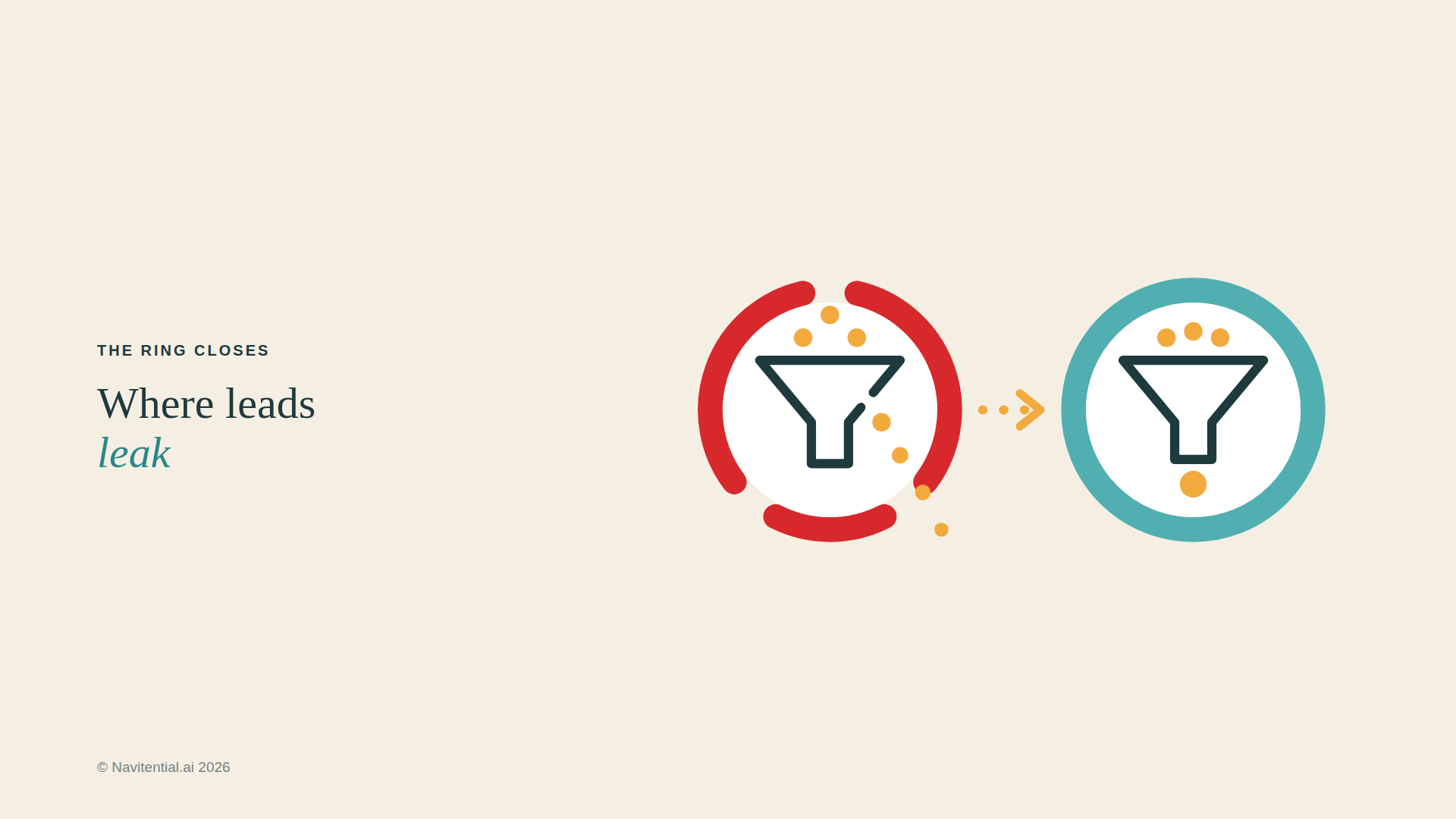
If the second and third are hard, that's normal. In my experience, most solopreneurs have never written their sales process down, so they can't see where people go quiet. And when you're the marketer, the salesperson and the admin, often in the same afternoon, the quiet leads are the first thing to slip.
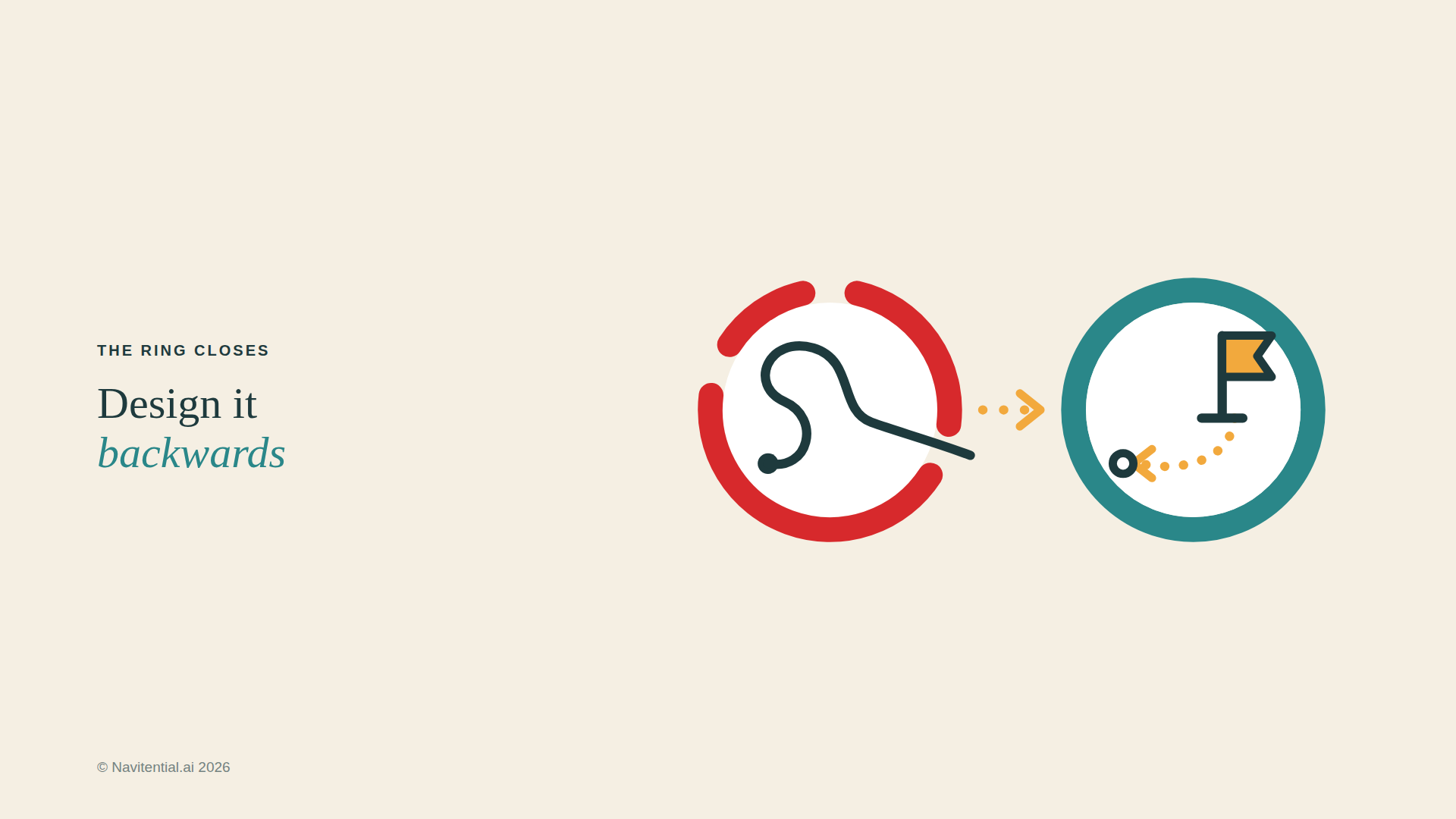
Design it backwards
This is the heart of the workshop, and it's three steps.
Map how you actually sell. Every step, from first hello to paid invoice. Not the process you wish you had. Include the messy bits. Where do you talk to people? What convinces them? How long does it really take?
Find where leads stall. The quiet gaps are where sales die.
Build a funnel step for each stage. Then let AI and automation keep it moving.
If you close on a call, your funnel's job is to get the right people booked into that call. Pushing them to a checkout page they were never going to use doesn't help. Do it in that order and your funnel stops being a lead machine parked next to your sales process. It becomes the front half of the same process.
It sounds obvious written down, which is exactly why it gets skipped. Most funnel advice starts at step three, because a template is easier to sell than "go and document how you really close deals".
Where AI helps, and where you lead
Once a real process exists, AI is useful for keeping it moving. It can flag a lead that's gone quiet for longer than your usual follow-up window, draft the follow-up before you forget, or summarise a call so your next conversation starts with context.
What it can't do is invent a sales process for a business that's never mapped one. Skip step one and an AI tool just helps you follow up faster on leads that were mismatched from the start. That speeds up the wrong thing.
It's the same pattern we've come back to all month. AI handles the transactional: the reminders, the drafts, the admin between steps. People handle the relational: the conversation, the judgement and the yes.
From a first small yes to your core offer
Once your steps are mapped, look at what you offer at each one. A simple product pathway has four parts:
A free entry point. A quiz, a checklist or a webinar.
A first small yes. A low-cost way to try working with you.
Your core offer. The thing that changes their business.
Ongoing support. What keeps them with you.
If there's a big jump between free and your core offer, that's often where the funnel stalls. People need a smaller step first.
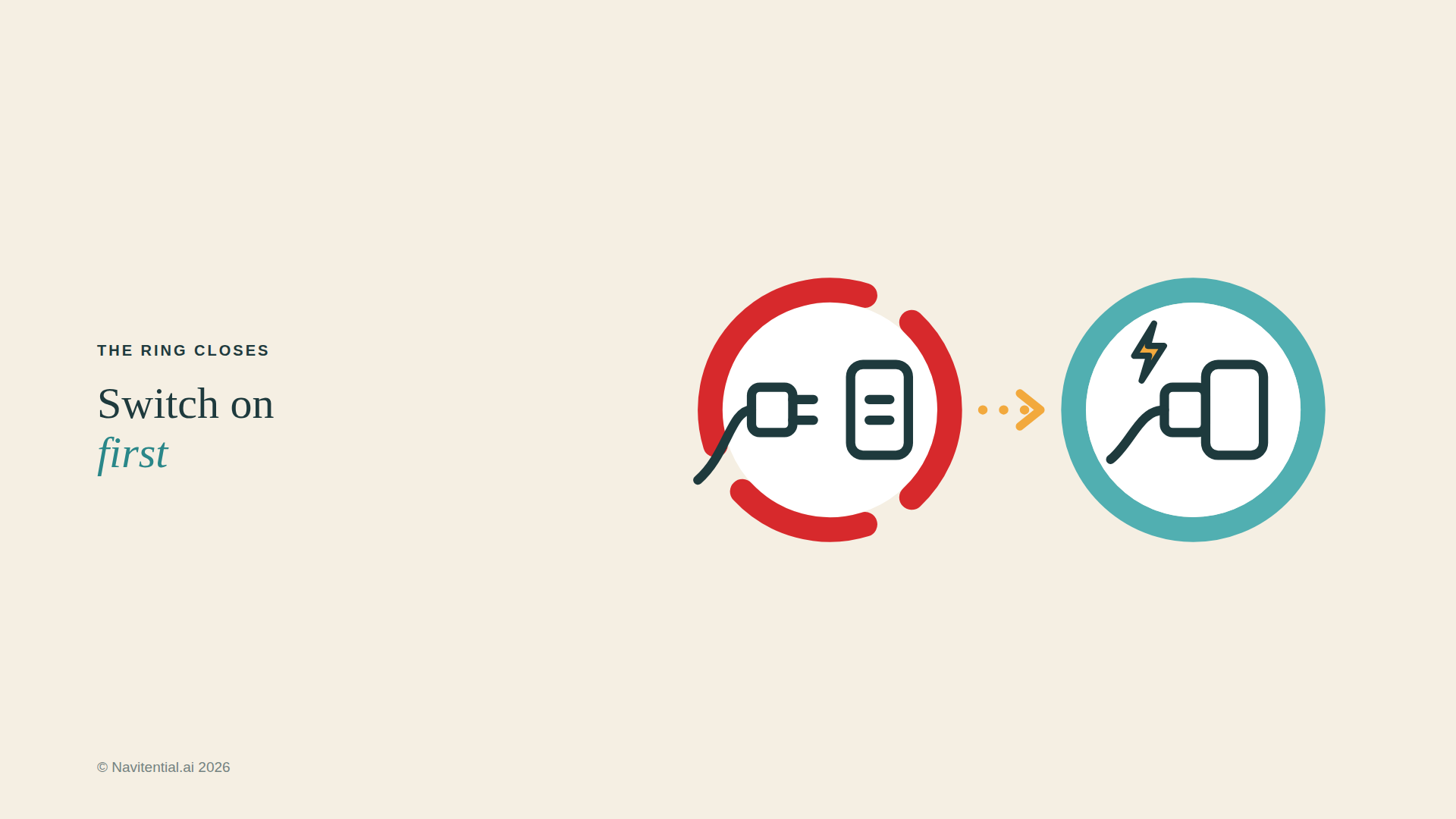
Three automations to switch on first
You don't need a big tech stack. Start with the three that save the most chasing:
An instant reply when someone enquires.
A reminder before every booked call.
A follow-up when someone goes quiet.
Each one sits at a handover point. None of them tries to close the sale for you.
Then go and have the conversation
A funnel gets people to the conversation. It doesn't have it for you.
That's why the workshop's working lunch belongs to Nimmity Zappert from Authentic Selling. She offers sales tips and runs the in-person networking practice, and her approach is refreshingly simple. Have one or two sentences that explain in plain language what you do. Have two or three questions that get people talking about the problem you solve. And don't try to do everything in one conversation: your goal is to book a time to talk properly later.
If you came to Nim's Selling as a Human session on 15 October, bring your notes. If not, her article Where marketing and sales meet is a good place to start.
Build yours with us on 22 October
Sales & Marketing Funnels in the Age of AI is the in-person finale of our NSW Small Business Month series, co-hosted with Nimmity Zappert of Authentic Selling. It's a hands-on workshop at ACU Co-Lab, North Sydney, on Thursday 22 October from 11am to 1pm, with a working lunch.
You'll map your own funnel, circle where people go quiet, and pick one fix to build this month. Then you'll practise the conversation that comes after it. Tickets are $25 ($20 for members).
Frequently asked questions
Is this a sales training session?
Partly. The first half is about marketing: mapping your funnel against how you really sell. Over lunch, Nim runs in-person networking practice, so you leave with the conversation as well as the funnel.
What if I don't have a funnel, just word of mouth?
Word of mouth is a sales process too. It has a pattern, even if nobody's written it down. Mapping it works just the same.
Do I need a big tech stack to fix this?
No. Mapping costs nothing except honesty about how you sell. Automation comes afterwards, and only at the handover points that need it.
What should I bring?
Your offer in one sentence, if you can, and your real numbers, even rough ones. How many enquiries you had last month, how many became clients, and roughly how long it took. It doesn't need to be polished. It needs to be honest.